
We May See Northern Lights Over Northern Illinois This Week
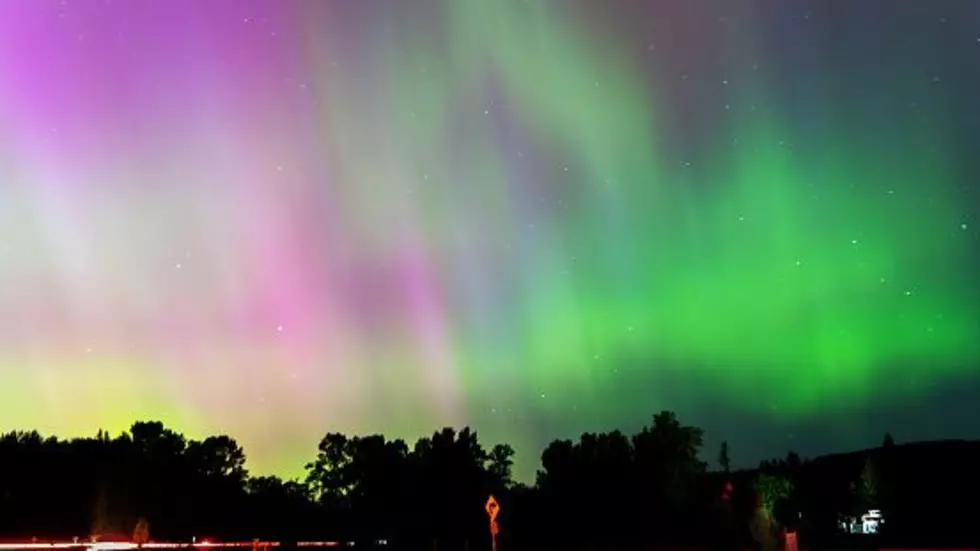
A few months back, there were photos of the Northern Lights, or Aurora Borealis, from all over Northern Illinois for almost a week. Facebook and Instagram were loaded with shots of the Northern Lights, which were very viewable thanks to all the clear nighttime skies we had at the time. Here's one my wife took in our backyard:

I know that photo is not quite the same as seeing them in the skies over Scandinavia, but in case you missed it, there's a good chance that you'll have an opportunity this week to get a great photo or two of the Aurora Borealis in Northern Illinois once again.

Another Geomagnetic Storm May Give Us The Gift Of Another Northern Lights Viewing Opportunity
Stargazers around Northern Illinois may well get that rare treat this week, as space weather conditions are aligning to potentially bring the Northern Lights far south of their usual far-north viewing areas.
According to the National Weather Service’s Space Weather Prediction Center (SWPC), a strong geomagnetic storm watch is in effect after a powerful coronal mass ejection (CME) erupted from the Sun this past weekend. That solar storm is expected to hit Earth as early as tomorrow (Tuesday) with peak effects possibly extending from Tuesday into Wednesday.
If the storm peaks as it's been forecasted, at a “G3” on the geomagnetic scale, the ability for people to see the Northern Lights could extend far beyond the Arctic. Experts think that a storm of this size could make the aurora visible as far south as Illinois and beyond.

Here's What To Look For Over The Next Few Nights In Northern Illinois
Because the timing of the CME’s impact still remains somewhat uncertain, it’s unclear exactly when the best window for aurora-spotting will be here in Northern Illinois. That uncertainty makes tonight into early Wednesday especially promising, although the lights could appear again later in the week, according to experts.
If you want to increase your chances, you should head to a spot well away from city lights with a clear view of the northern horizon. Give your eyes time to adjust to the dark (about 15 to 20 minutes) and even consider using a camera. Sometimes long-exposure photos or photos shot on "night-mode" can pick up faint auroras that are nearly invisible to the naked eye.
LOOK: 25 over-the-top Christmas displays from across America
Gallery Credit: Annalise Mantz & Madison Troyer
More From WROK 1440 AM / 96.1 FM


