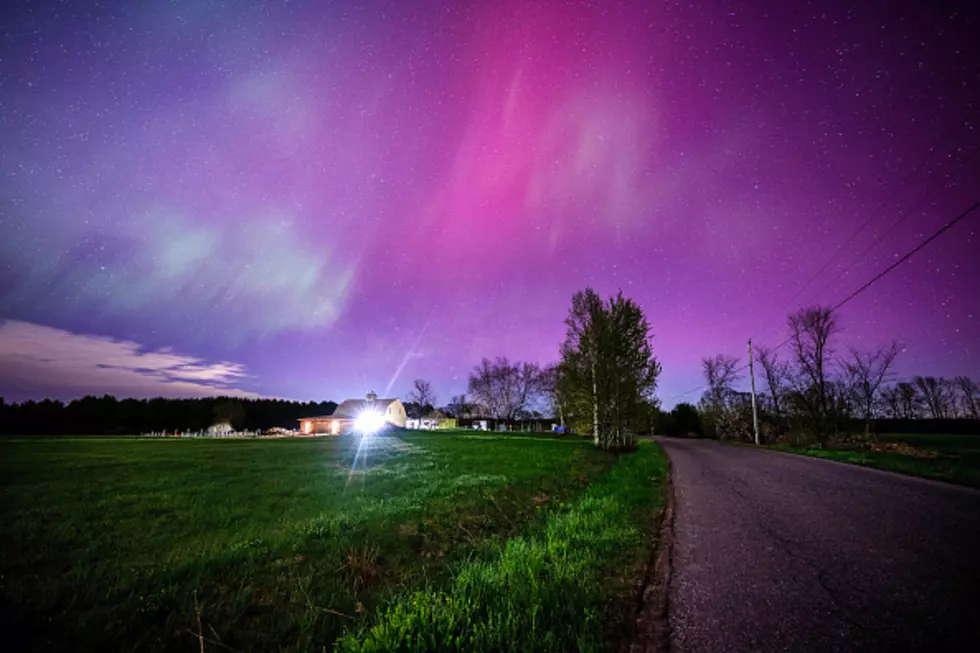

Northern Lights Nearly Guaranteed Tonight in Northern Illinois
If you were out last night, you may have seen the Northern Lights decorating the skies over Northern Illinois.
I had long-since gone to bed, but my wife Amy was out with our dog and took some shots from our Rockford backyard around 11pm:


Granted, the colors of the Aurora Borealis aren't quite as vibrant as the colors you'd see if you were scanning the skies well north of Northern Illinois, but for using a 5 year old phone camera, they came out pretty well.
Here's the thing. There's no need for anger or disappointment if you missed last night's sky show of the Northern Lights, because you'll be getting another chance to see them tonight if the weather cooperates, which forecasters seem to think it will.

Our Area's Chances Of Being Able To See The Northern Lights Are Much Better Than They Usually Are
If you thought the Northern Lights were only for Alaska or Scandinavia, think again. Tonight, Northern Illinois' skies are reportedly giving us an almost 80% chance of seeing the Aurora Borealis, and last night’s photos prove just how vivid this display can be.
So why are the Northern Lights appearing so far south?
The Aurora Borealis happens when charged particles from the sun collide with gases in Earth’s atmosphere, creating dancing lights in the sky. Normally, these particles interact closer to the poles, which is why auroras are rare in Illinois. But right now, a strong geomagnetic storm from solar activity is pushing the aurora further south than usual, lighting up skies over places like Rockford, Aurora, and even parts of Chicago.

Here's When To Look For The Northern Lights, Along With The Best Way Of Getting Photos Or Video
The best viewing times are after sunset and before midnight, when the sky is darkest. Clear skies are key, because cloud cover can block the display entirely. If the forecast shows partly cloudy skies, it’s still worth trying. Find a location with as little light pollution as possible, such as parks or open fields.
As far as capturing the images of the Northern Lights on your phone goes, you don’t need a fancy camera to photograph the Aurora Borealis, although a tripod on a steady surface sure helps. Here are some tips for getting the most out of your camera:
Use Night Mode: Most newer smartphones have a night or long-exposure mode that can capture more light than a standard shot.
Keep it steady: Rest your phone on a car hood, bench, or tripod. Even a small shake can blur the lights.
Adjust focus and exposure: Tap the screen to focus, then adjust the brightness slightly lower if the aurora appears washed out.
Try a wide-angle shot: If your phone has a wide lens, use it to capture more of the sky.
If seeing the Northern Lights up close and personal is on your bucket list, you should head way up north and try seeing them like this guy:
LOOK: The top small towns for taking in America's fall foliage
Gallery Credit: Stacker
More From WROK 1440 AM / 96.1 FM