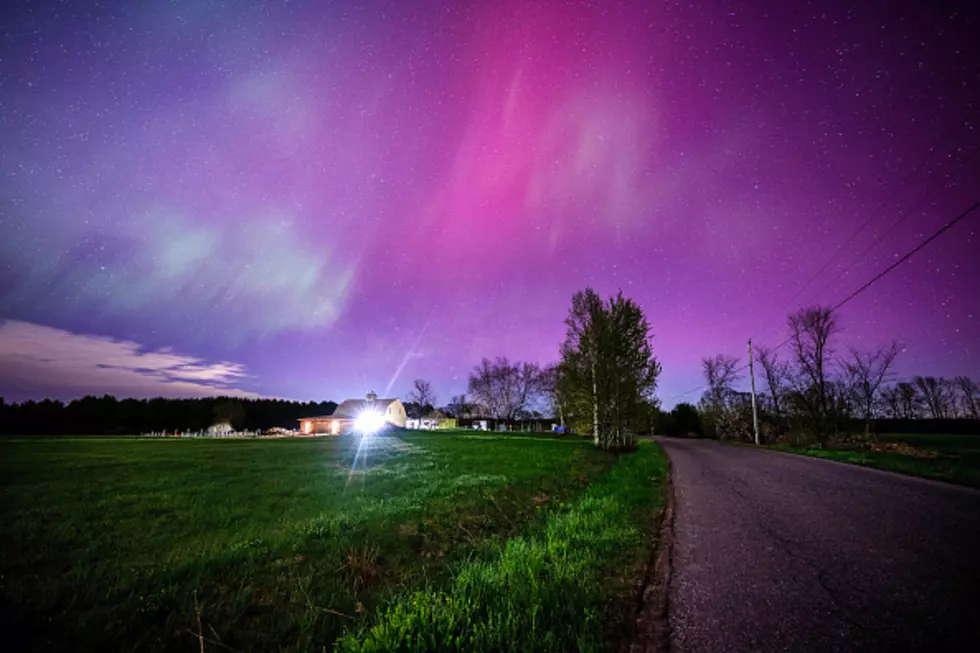

Perseid Meteor Showers Peaking Over Northern Illinois This Week
Who's ready for some stargazing this week, particularly on Tuesday and Wednesday? It's time to start looking up into the nighttime skies over Northern Illinois once again, because we've got a really cool light show to catch if the sky conditions are right.
One of the very coolest things about the Perseid Meteor Showers is that in addition to being one of the most popular and prolific meteor showers of the year, the Perseids hang around for almost a month and a half.
They got started on July 14th, and they'll do their thing in the heavens until around the last week of August, but the absolute best viewing happens on this Tuesday, August 12th and Wednesday, August 13th.

According To A Bunch Of Sky-Watching Websites I Visited, The Perseids Are Pretty Much The Gold Standard Of Meteor Showers
Space.com has some background on what you can see over the next six weeks:
Every year, Earth passes through the path of Comet Swift-Tuttle from July 17 to Aug. 24, with the shower's peak — when Earth passes through the densest, dustiest area — occurring Aug. 11-13. That means you'll see the most meteors in the shortest amount of time near that time. Years without moonlight see higher rates of meteors per hour, and in outburst years (such as in 2016) the rate can be between 150-200 meteors an hour.

So What's The Best Time For Viewing The Perseids In And Around Rockford?
According to the experts out there, you should plan to start "late," which is actually "early," as in late at night/early in the morning. Perseid meteors tend to strengthen in number as late night deepens into midnight. The shower typically produces the most meteors in the hours before dawn.
NASA points out that when you sit back to watch a meteor shower, you're actually seeing the pieces of comet debris heat up as they enter the atmosphere and burn up in a bright burst of light, streaking across the sky at 37 miles per second.
The peak of the Perseids on Tuesday and Wednesday of this week should be very viewable because it perfectly coincides with a New Moon on August 12th. Because there will be zero moonlight to wash out the sky, even the faintest shooting stars will be visible.
In a big-time cosmic coincidence, Wednesday, August 12th is also the day of a highly anticipated total solar eclipse. Eclipse-chasers in Greenland, Iceland, and Spain will experience totality during the day, while much of North America and Europe will see a partial eclipse.
QUIZ: Can You Guess the Iconic TV Show From Just One Opening Freeze-Frame?
Gallery Credit: Stephen Lenz
More From WROK 1440 AM / 96.1 FM